How Seasonal Mood Boards Are Driving This Year’s Interior Design News
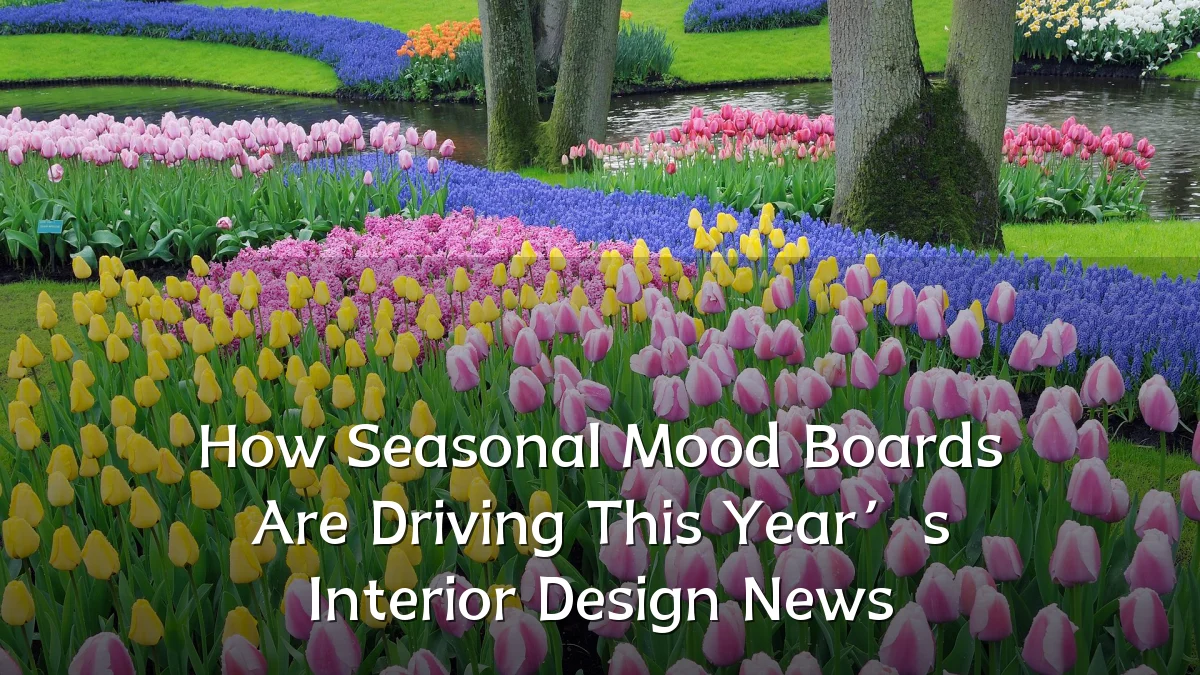
Seasonal mood boards have evolved from behind-the-scenes planning tools into a leading editorial format in interior design coverage. This year, they are not just illustrating trends — they are increasingly shaping the news cycle itself, giving publishers and readers a shared visual language for what matters each season.
Recent Trends
Across design media, the seasonal mood board has become a recurring anchor piece. Rather than standalone product roundups or trade-fair recaps, editors are leading with curated boards that pair color palettes, textures, and material directions for the upcoming season.

- Editorial releases now group spring, summer, autumn, and winter previews around a single visual concept.
- Palette-driven coverage has gained prominence over item-specific recommendations.
- Social platforms reward the modular, save-and-share quality of mood-board graphics.
- Some outlets are publishing boards two or more seasons ahead, extending the planning cycle.
Background
Mood boards have long been an internal staple of design studios, used to align clients on tone, texture, and spatial direction before construction begins. They were rarely public-facing. The rise of image-led social platforms changed that, turning collages into shareable storytelling devices.

Seasonality gave the format a reliable editorial rhythm. Interior design has always had seasonal touchpoints — spring refresh, holiday dressing — but the formalized seasonal mood board, with its named palettes and curated materials, has become a standard unit of design journalism in recent years, bridging creative inspiration and consumer guidance.
User Concerns
As mood boards multiply, so do reader reservations. The format is highly visual, but its practical limitations are becoming more visible.
- Aspiration gap: Curated imagery rarely communicates budget, ceiling height, or natural light — key variables in real rooms.
- Homogenization: Seasonal boards tend to converge on a narrow set of palettes, potentially flattening regional and personal diversity.
- Replacement pressure: Frequent seasonal releases can imply that interiors should be updated on a fast cycle.
- Sustainability tensions: Rapidly changing material and color stories can conflict with durable, long-term design values.
- Sourcing gaps: Many boards omit product origins, pricing, or availability, leaving readers without a clear path to purchase.
Likely Impact
The influence of seasonal mood boards will likely extend beyond the page. Editorial calendars will continue to align around seasonal releases, while retailers and design brands may curate products and campaigns around the same vocabularies.
- Editorial planning: Expect clearer seasonal content calendars, with mood boards as primary stories rather than supporting visuals.
- Retail alignment: Product curation, lookbooks, and promotions are likely to echo the season's prevailing board — though adoption may vary by market.
- Practice shift: Interior designers may introduce mood boards earlier in client conversations, using them as shared reference points.
- Search behavior: Consumers are increasingly searching by season and mood rather than by product category, reshaping how design content is labeled and found.
- Counter-movement: A "slow design" response may emerge, positioning timeless interiors as an alternative to seasonal churn.
What to Watch Next
The format is still evolving. Several developments could define how seasonal mood boards influence design news in the coming seasons.
- Interactivity: Mood boards may become clickable and shoppable, linking each element to sources, prices, and alternatives.
- Sustainability framing: Publishers may add "lasting value" criteria — durability, repairability, reuse — alongside seasonal appeal.
- AI-generated boards: Automated imagery will test trust and attribution, raising questions about originality and editorial authenticity.
- Geographic nuance: Seasonality could become more regionally specific, accounting for hemispheres, climate zones, and local material availability rather than one global cycle.
- Personalization: Platforms may eventually tailor mood boards to a reader's location, light conditions, and room type, making the format more actionable.
Seasonal mood boards are unlikely to disappear from interior design coverage. The open question is whether they will become more responsible, more personalized, or simply more numerous — and how editors and readers navigate the difference.